Bouvier des Flandres#
Breed Overview#
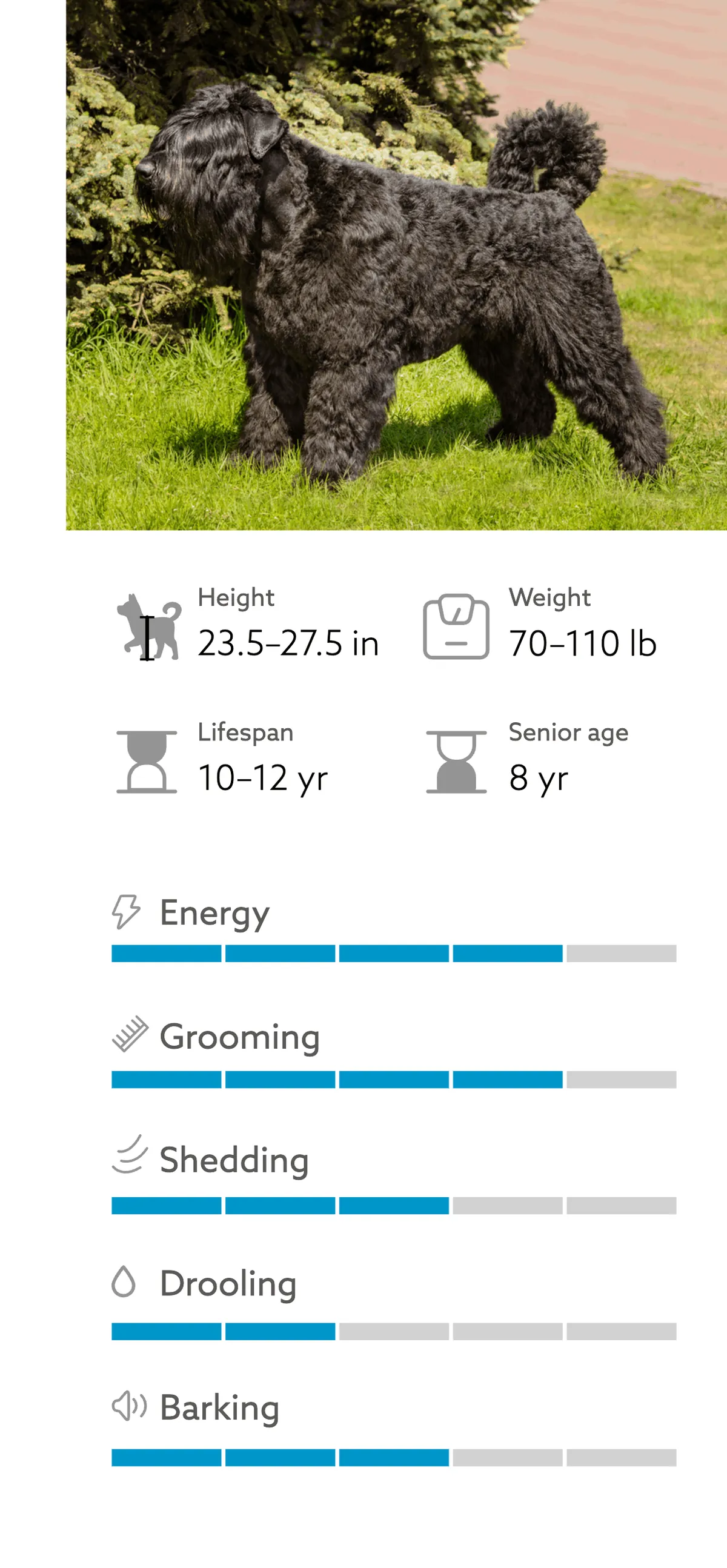 Bouviers des Flandres are powerful herding and farm dogs known for strength, intelligence, and a calm, protective temperament. This breed was originally developed in Belgium for driving cattle and guarding property. Bouviers are loyal, steady, and highly trainable, but require structure and regular activity to stay balanced.
Appearance#
Bouviers have a strong, rugged build suited for farm work and protection.
- A large, muscular body provides strength and endurance for working roles.
- Their dense, rough, double coat protects them in harsh weather conditions.
- A prominent beard and mustache give the breed a distinctive appearance.
- Coat colors include fawn, black, brindle, gray, and salt-and-pepper variations.
Temperament and Training#
This breed is intelligent and loyal but benefits from consistent leadership.
- Bouviers tend to be devoted to their families and protective of their environment.
- They require early socialization to ensure balanced behavior around strangers.
- Many are eager to learn but may become bored if under-stimulated or lack structured activity.
- Without sufficient exercise, they may develop destructive or restless behaviors.
Exercise Needs#
Bouviers des Flandres need regular daily exercise to maintain both physical and mental health. Walks, work-like activities, and structured training help meet their needs. High impact exercise should be avoided while they are growing to prevent joint injury.
Grooming and Coat Care#
Their coat requires consistent maintenance to prevent matting.
- Weekly brushing helps prevent tangles and maintains coat condition.
- Their dense undercoat can trap debris and moisture if not properly maintained.
- Regular bathing and grooming are needed to manage coat health.
- Routine ear cleaning, nail trimming, and dental care should be maintained.
Ideal Home Environment#
Bouviers do best in homes that provide structure, space, and consistent activity.
- Activity Level: Moderate to high with daily exercise
- Living Space: Best with access to outdoor space
- Time Alone: Moderate tolerance when exercised
- Experience Level: Best for experienced or committed owners
- Children: Generally good with supervision
- Other Pets: Usually compatible with proper introduction
- Climate Needs: Prefers cooler climates
Health Considerations for Bouviers des Flandres#
Bouviers des Flandres are predisposed to hip and elbow dysplasia, inherited eye disease, and cardiac disease. Myopathy and laryngeal paralysis are also recognized breed concerns. Their deep chest increases the risk of gastric dilatation-volvulus, making awareness of this emergency especially important.
| Puppy: Birth to 12 months | Adult: 1 to 8 years | Senior: 8+ years |
| - Hip dysplasia; elbow dysplasia - Bouvier des Flandres myopathy - Deafness - Congenital kidney disease (ectopic ureters) - Cardiac disease - Portosystemic shunt - Shoulder osteochondrosis - Laryngeal paralysis | - Gastric dilatation-volvulus - Entropion - Epilepsy - Hypothyroidism | - Glaucoma - Cataracts |
Disclaimer: This handout does not provide a comprehensive list of all health, genetic, developmental, or behavioral conditions that may affect this breed. Individual dogs may vary.
© Copyright 2026 LifeLearn Inc. This content was written by LifeLearn Animal Health (LifeLearn Inc.) and is licensed to this practice for the personal use of its clients. Copying, printing, or further distributing this material is prohibited without LifeLearn’s express written consent. The use of artificial intelligence or automated tools to rewrite, republish, adapt, or repurpose this content, in whole or in part, is prohibited and does not create any ownership or derivative rights. This content does not contain all available information about medications and has not been reviewed by the FDA’s Center for Veterinary Medicine or Health Canada’s Veterinary Drugs Directorate. This content is not a substitute for medical advice or a proper clinical examination. Please contact your veterinarian if you have any questions or concerns about your pet’s health. Last updated on Sep 18, 2026.