Bloodhound#
Breed Overview#
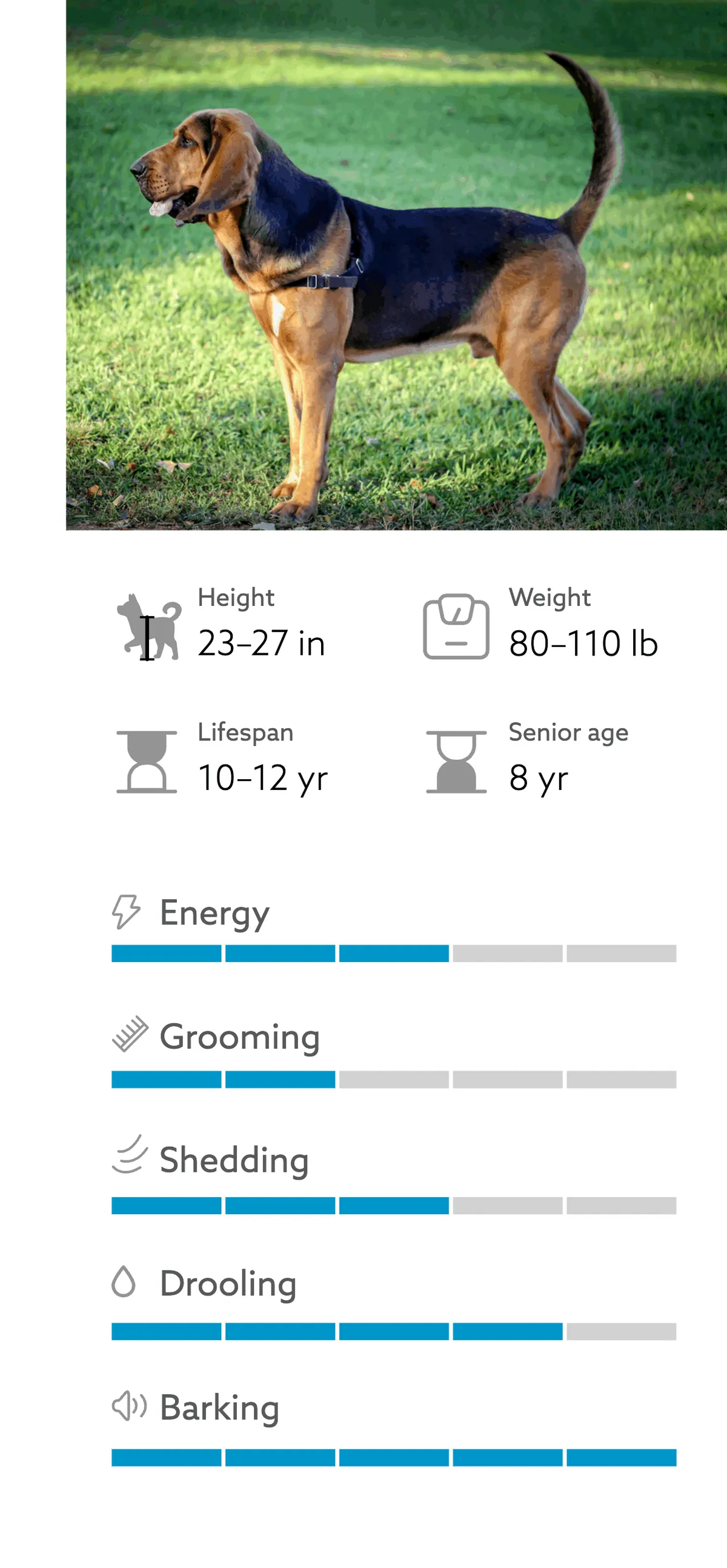 Bloodhounds are large scent hounds known for their tracking ability, strong sense of smell, and gentle temperament. This breed was developed for tracking people and animals over long distances. Bloodhounds are gentle, affectionate, and typically calm with family. When working, however, they are strongly driven by scent, and often prioritize tracking over responding to commands.
Appearance#
Bloodhounds have a large, distinctive build designed for scent tracking.
- A heavy, muscular body supports endurance over long distances.
- Loose skin around the face and neck traps scent particles but also creates eye and skin concerns.
- Long, pendulous ears enhance scent tracking ability.
- Their short coat is smooth and comes in black and tan, red, and liver combinations.
Temperament and Training#
This breed is gentle and affectionate but highly independent.
- Bloodhounds are typically friendly and deeply bonded to their families.
- Their strong scent drive can sometimes override commands, requiring patience in training.
- They may become vocal, especially when following a scent trail.
- Consistent, reward-based training helps improve responsiveness but may not override instinct.
Exercise Needs#
Bloodhounds need moderate daily exercise, including walks and controlled outdoor activity. Because of their scent drive, they should be kept on leash or in secure areas. Regular activity helps maintain weight and supports joint health.
Grooming and Coat Care#
Their coat is low-maintenance, but skin and ear care are essential.
- Weekly brushing helps manage shedding and maintain coat condition.
- Long ears require frequent cleaning to prevent infection.
- Skin folds should be monitored for moisture and irritation.
- Routine nail trimming and hygiene should be maintained.
Ideal Home Environment#
Bloodhounds do best in homes that provide space, supervision, and patience.
- Activity Level: Moderate with daily exercise
- Living Space: Best with secure outdoor space
- Time Alone: Moderate tolerance but prefers companionship
- Experience Level: Best for patient or experienced owners
- Children: Generally good with supervision
- Other Pets: Usually compatible
- Climate Needs: Caution with overexertion in heat.
Health Considerations for Bloodhounds#
Bloodhounds are predisposed to hip and elbow dysplasia and should have cardiac screening before breeding. Their deep chest increases the risk of gastric dilatation-volvulus, while their loose facial skin and long ears contribute to eyelid problems and recurrent ear infections. Regular ear and skin-fold care, weight management, and early attention to eye or mobility changes help support long-term health.
| Puppy: Birth to 12 months | Adult: 1 to 8 years | Senior: 8+ years |
| - Hip dysplasia - Elbow dysplasia - Patellar luxation - Congenital eyelid disorders (entropion, ectropion, “cherry eye”) - Skin fold infections - Congenital heart valve disease | - Gastric dilatation-volvulus - Keratoconjunctivitis sicca (“dry eye") - Chronic ear infections | - Degenerative myelopathy |
Disclaimer: This handout does not provide a comprehensive list of all health, genetic, developmental, or behavioral conditions that may affect this breed. Individual dogs may vary.
© Copyright 2026 LifeLearn Inc. This content was written by LifeLearn Animal Health (LifeLearn Inc.) and is licensed to this practice for the personal use of its clients. Copying, printing, or further distributing this material is prohibited without LifeLearn’s express written consent. The use of artificial intelligence or automated tools to rewrite, republish, adapt, or repurpose this content, in whole or in part, is prohibited and does not create any ownership or derivative rights. This content does not contain all available information about medications and has not been reviewed by the FDA’s Center for Veterinary Medicine or Health Canada’s Veterinary Drugs Directorate. This content is not a substitute for medical advice or a proper clinical examination. Please contact your veterinarian if you have any questions or concerns about your pet’s health. Last updated on Sep 18, 2026.