Australian Cattle Dog#
Breed Overview#
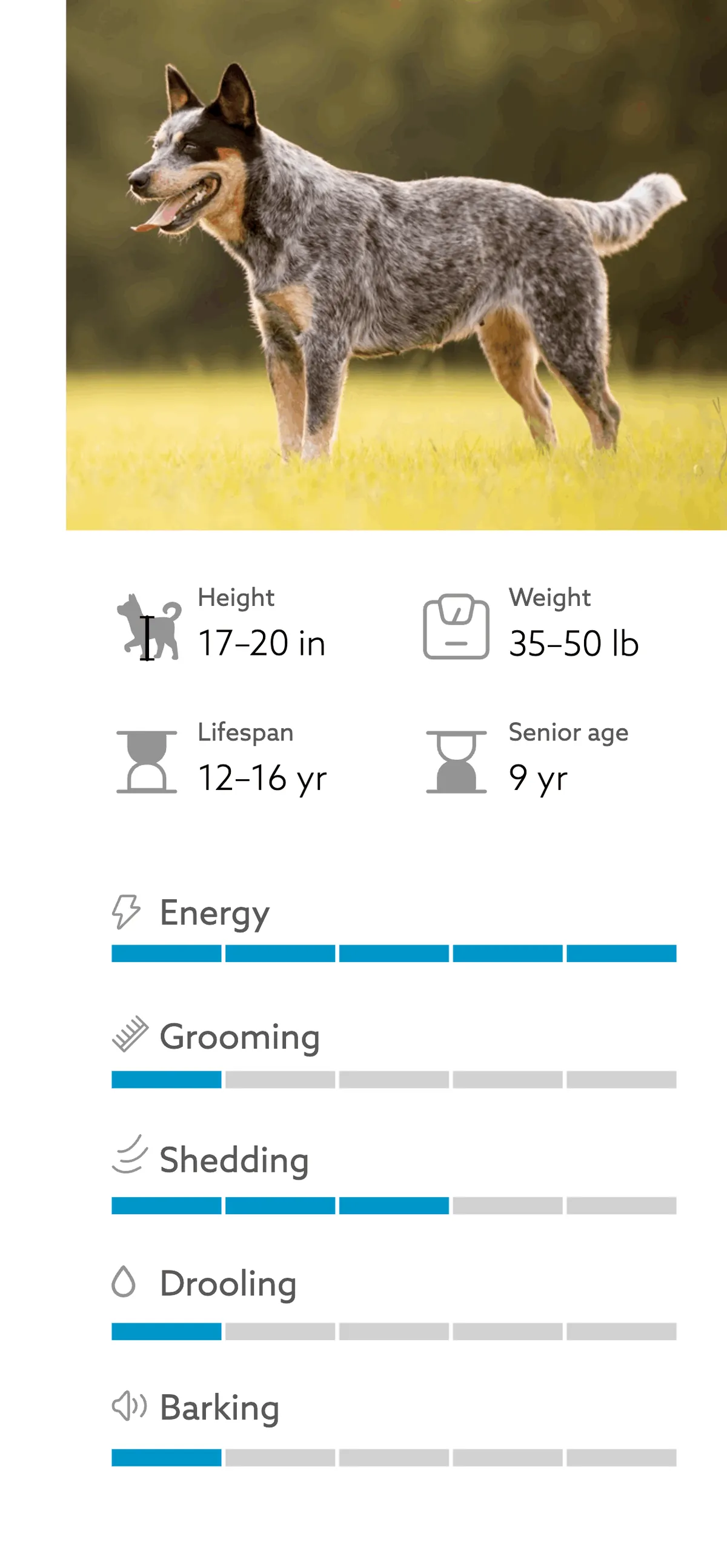 Australian Cattle Dogs are medium-sized herding dogs known for intelligence, endurance, and a strong work drive. These dogs are intelligent, independent, and capable of sustained physical effort, but they require structure, training, and consistent activity to remain well-behaved. They tend to form strong bonds with their families but may remain cautious with strangers.
Appearance#
Australian Cattle Dogs have a compact, muscular build designed for endurance and agility.
- A strong, balanced body allows for sustained movement over long distances.
- Their short double coat protects them from weather and rough terrain.
- Coat colors include blue or red speckled patterns.
- Their alert expression reflects their intelligence and focus.
Temperament and Training#
This breed is intelligent and highly motivated, but requires experienced handling.
- Australian Cattle Dogs are extremely driven and often seek out work or activity.
- Many form strong bonds, but may be reserved or protective around strangers.
- Herding instincts may appear as nipping behavior, especially without training.
- Without enough stimulation, they can become destructive or difficult to manage.
Exercise Needs#
Australian Cattle Dogs require intense daily exercise and mental stimulation. Activities such as running, herding, training, and problem-solving tasks are essential. Without sufficient activity, they are likely to develop significant behavioral issues.
Grooming and Coat Care#
Their coat is relatively low-maintenance but still requires regular care.
- Weekly brushing helps remove loose hair and maintain coat condition.
- Seasonal shedding may increase and require additional grooming.
- Routine nail trimming and ear cleaning should be maintained.
- Bathing is only needed occasionally based on activity level.
Ideal Home Environment#
Australian Cattle Dogs do best in highly active homes that provide structure and purpose.
- Activity Level: Very high with daily vigorous exercise
- Living Space: Best with access to large outdoor areas
- Time Alone: Limited tolerance; prone to boredom
- Experience Level: Best for experienced or highly active owners
- Children: Best with older children due to herding behavior
- Other Pets: May be selective; supervision recommended
- Climate Needs: Adaptable
Health Considerations for Australian Cattle Dogs#
Australian Cattle Dogs have several inherited health risks, including deafness, hip and elbow dysplasia, progressive retinal atrophy, and primary lens luxation. Early screening and maintaining a healthy body weight help support lifelong mobility, hearing, and vision.
| Puppy: Birth to 12 months | Adult: 1 to 9 years | Senior: 9+ years |
| - Hip dysplasia - Elbow dysplasia - Congenital deafness - Dermatomyositis - Portosystemic shunt | - Progressive retinal atrophy - Primary lens luxation - Patellar luxation - Mast cell tumors | - Cataracts - Glaucoma |
Disclaimer: This handout does not provide a comprehensive list of all health, genetic, developmental, or behavioral conditions that may affect this breed. Individual dogs may vary.
© Copyright 2026 LifeLearn Inc. This content was written by LifeLearn Animal Health (LifeLearn Inc.) and is licensed to this practice for the personal use of its clients. Copying, printing, or further distributing this material is prohibited without LifeLearn’s express written consent. The use of artificial intelligence or automated tools to rewrite, republish, adapt, or repurpose this content, in whole or in part, is prohibited and does not create any ownership or derivative rights. This content does not contain all available information about medications and has not been reviewed by the FDA’s Center for Veterinary Medicine or Health Canada’s Veterinary Drugs Directorate. This content is not a substitute for medical advice or a proper clinical examination. Please contact your veterinarian if you have any questions or concerns about your pet’s health. Last updated on Sep 18, 2026.